Our Products
Discover our diverse vanilla range – all products are manufactured to the highest standards and with over 140 years of experience in vanilla processing. Click through to learn more about each category. As a vanilla importer and wholesale supplier, we offer businesses beans, powder and extract for their products.
Cut
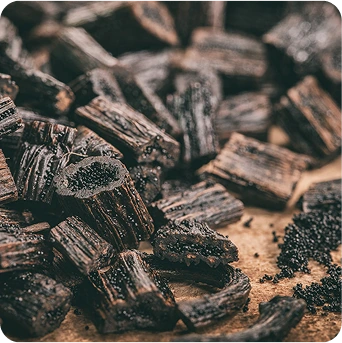
We can supply you with any type of cut vanilla (e.g., tea cuts and cuts at any stage of drying; various lengths). These are also produced entirely in-house under our control.


Extract
Our liquid extract is available in different versions and both with and without seeds.


Pods
We offer all pods in gourmet quality, as well as extraction qualities from Madagascar, Uganda, Papua New Guinea and Tahiti.


Powder
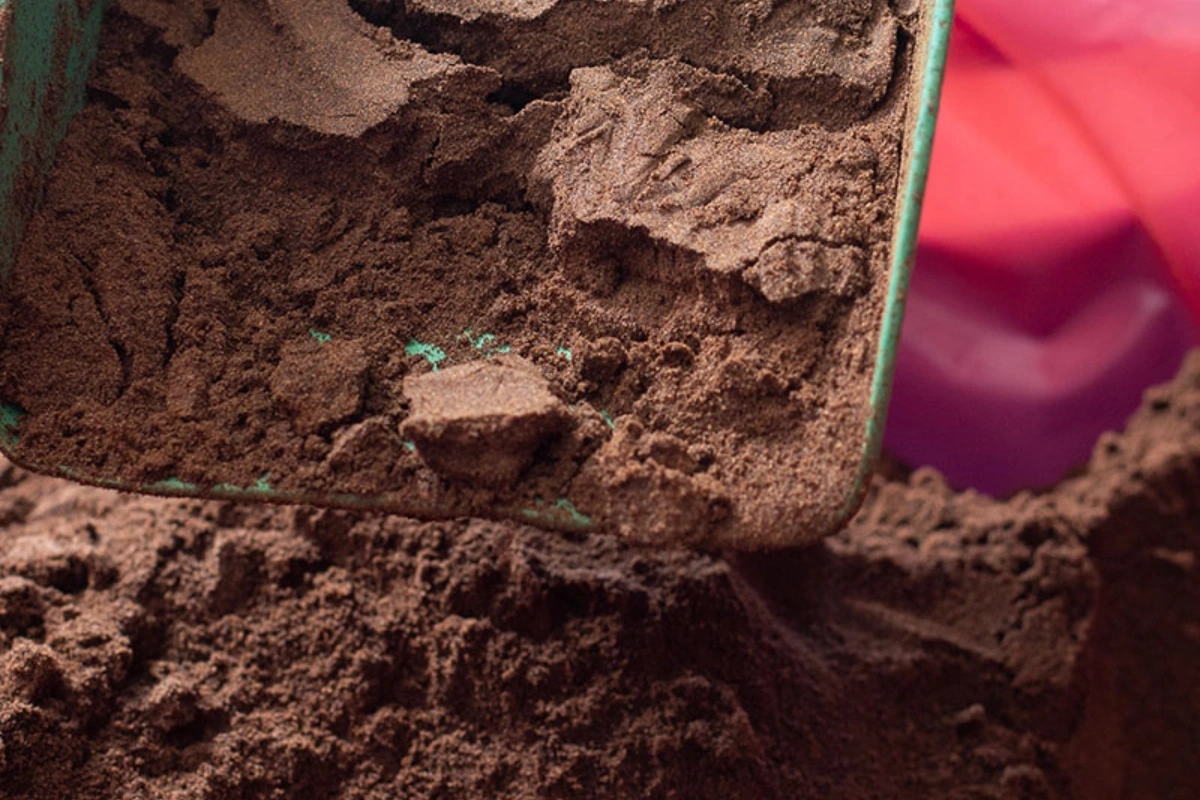
We produce both whole powder and extracted vanilla powder from various sources. Thanks to our versatile facilities equipped with state-of-the-art technology and our qualified staff with many years of experience, we produce vanilla powder of the highest quality – also tailor-made to your requirements, for example, regarding grain size. We also pay particular attention to product safety: By exclusively processing vanilla, cross-contamination with allergens or off-flavors is eliminated. Our strict hygiene standards and our FSSC 22000-certified processes ensure our high level of quality.


Seed
Our fine, clean seeds are separated from the vanilla pods here on-site. They are ideal for fine baked goods, desserts, or ice cream and give your products the characteristic appearance of real vanilla. The seeds are available from various sources.


Sugar
Our finely ground vanilla sugar is made with high-quality organic sugar and contains 7% aromatic vanilla powder. Depending on the vanilla powder used, the final product is available in conventional or organic quality. For larger quantities, we also offer customized blends – tailored to your needs.


Which form of vanilla fits your product? Our comparison of pods, powder, extract and seeds shows how each affects flavour, visible specks and processing.
Vanilla – The Queen of Spices
Vanilla, known as the "Queen of Spices," plays a central role in the food industry. It is used in a wide variety of products, including baked goods, desserts, beverages, and even in the perfume industry.
The term "Bourbon Vanille"
The term "Bourbon Vanilla" refers to vanilla that originates from the Bourbon Islands (present-day Madagascar, the Comoros, Mauritius, Rodrigues, and Réunion, although vanilla cultivation is no longer practiced there). This designation is associated not only with geography but also with the quality of the vanilla.
Quality: Bourbon vanilla is known for its rich and complex aroma. The special climatic conditions and traditional cultivation methods result in high quality and an intense flavor.
Processing: The manufacturing process involves meticulous steps that ensure the optimal development of the aromas. This vanilla has established itself in the trade as a synonym for high-quality vanilla products.
Types of vanilla and their differences
The Vanilla genus includes over 100 species, but only a few are commercially relevant. The two most important in Europe and North America are:
Vanilla planifolia
Origin: Originally from Mexico, today mainly found in Madagascar and Uganda (though from Uganda it’s not the true Bourbon vanilla)
Aroma: Intensely sweet, with a relatively high vanillin content (> 2% in particularly good quality products). It is the most widely used variety in the food industry.
Uses: Ideal for baked goods, desserts, and beverages. It is known for its strong and rich aroma. For us at Aust & Hachmann, it is the most relevant variety.
Vanilla tahitensis
Origin: French Polynesia (Tahiti) and Papua New Guinea
Aroma: Floral, sweet and fruity, with a lower vanillin content (up to 0.5%).
Uses: Particularly valued in gourmet cuisine and for the production of ice cream and high-quality perfumes.
Standards and production conditions for vanilla
BIO (Biological / Organic)
Cultivation method: No synthetic chemical pesticides, herbicides, or artificial fertilizers.
Certification: Must be certified according to recognized organic standards (e.g., EU Organic, USDA Organic).
Goal: Environmentally and health-friendly cultivation, protection of biodiversity.
Social aspects: Not necessarily minimum social standards; the focus is on environmental aspects.
FT (Fairtrade)
Social conditions: Producers receive minimum prices and premiums to support community projects (e.g., education, health).
Certification: According to Fairtrade standards (e.g., FLO, Fairtrade International).
Environment: Environmental regulations exist, but they are less stringent than for organic farming.
Goal: To improve the living conditions of farmers, especially in developing countries.
FTO (Fairtrade Organic)
Combination of organic and fairtrade:
Organic certified: Environmentally friendly cultivation without chemicals.
Fairtrade certified: Minimum social standards, fair prices.
Goal: Sustainability in ecological AND social terms.
Price: Usually the most expensive category – but with the highest ethical standards.
Conventional
Cultivation method: Use of chemical fertilizers and pesticides is permitted.
No social certification: Often no guarantee of fair wages or working conditions.
Price: Usually cheaper, but with higher environmental and social costs.
Quality: Can be good depending on the producer, but origin and cultivation methods are less transparent.
