Quality & Sustainability
Today, we are increasingly witnessing the consequences of unsustainable practices around the world. As businesses are an integral part of the modern world, sustainability is our core value. We are committed to sustainable vanilla trade to fulfill our social and environmental responsibilities as a global company. Read more about our sustainability programs here.
For over three decades, we’ve been deeply committed to the people of the regions in Madagascar where our vanilla is grown. What others may see as just a raw material means much more to us: it represents life stories, livelihoods, and a shared responsibility we take seriously – every single day.
Our Commitment – With Heart, Responsibility, and Vision
Our work on the ground goes far beyond trade. We invest in education, healthcare, environmental protection, and social equity – not just through short-term projects, but through long-term partnerships built on genuine care for the well-being of local communities. We know the places, we know the people – and we stay in close, ongoing dialogue with them.
By collaborating with NGOs, local organizations, and international partners, we help create lasting opportunities. Our goal isn’t just to buy fairly – but to act fairly. With mutual respect, a sustainable approach, and a deeply human perspective.
This page offers a glimpse into our project work. For us, responsibility isn’t an add-on – it’s part of who we are.
Our programs
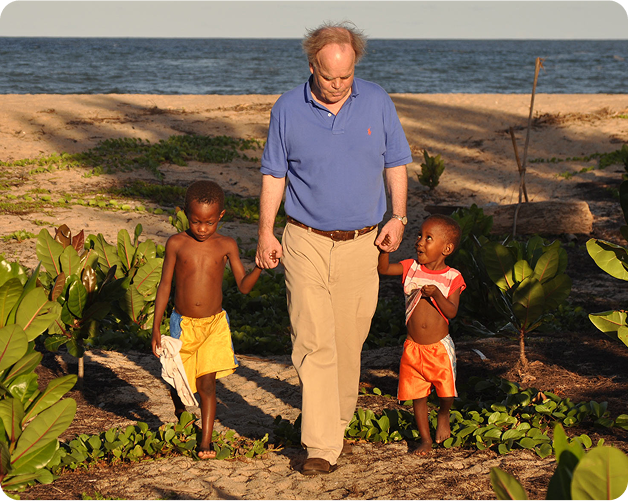
With Aust & Hachmann, we have been supporting social development projects in Madagascar for 30 years.
As a multi-generational wholesale buyer, we see it as our responsibility to promote education and prosperity in the vanilla-growing regions on the one hand, and to protect the environment by creating better living conditions for the local population on the other.

Fairtrade certified since 2021
We have been Fairtrade certified since 2021and thus support fair vanilla production and remuneration as well as the traceability of the products.
Cooperation
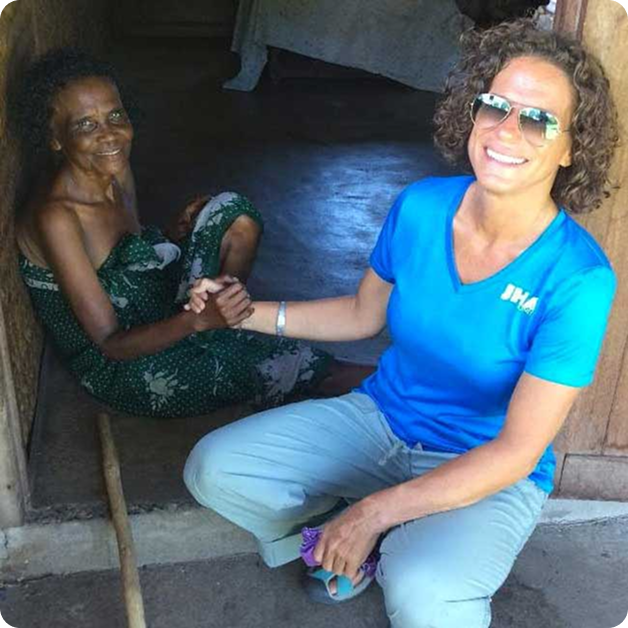
We also work closely with our Sustainability Officer, Joey Moscovitch, who has been making annual humanitarian trips to Madagascar’s vanilla region since 2013. Joey regularly reports on vanilla suppliers and project progress on the ground. This information serves as a basis for further support and collaboration. Joey founded the JHA Fund as an NGO. Within this framework, Joey oversees many initiatives:

Partnerships

Partnership with
- Duke University Lemur Center
- Seacology
- The Lemur Conservation Foundation
- USA Ambassador’s Self-Help Program
- MACOLLINE
- C.A.L.A.: Comité d’Aide aux Lépreux d’Antalaha - Leprosy Relief Committee of Antalaha
- C.R.E.E.: Centre de recherche en éducation environnemental
- GIZ Deutsche Gesellschaft für Internationale Zusammenarbeit (GIZ) GmbH (see page 30-31)
- DREN Direction Régionale de l’éducation Nationale Circonscription Scolaire (Ministry of Education School District)

Education & Medical
Supply cooperation with
- Herimanana construction to provide access to educational opportunities and medical facilities.
- C.R.E.E.: Centre de recherche en éducation environnementale + DREN Direction Régionale de l’éducation Nationale Circonscription Scolaire (Ministry of Education School District)

3 Ways You Can Help
1. Sponsor a Project or Enter a Partnership
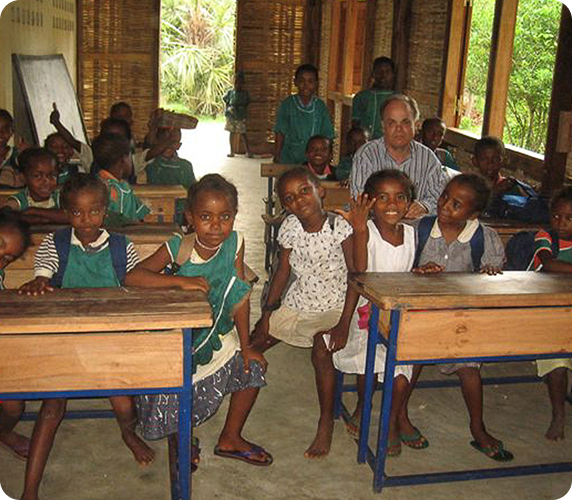
Get involved in a social initiative – together with Aust & Hachmann and our partners in Madagascar's vanilla region. Our main focus lies on supporting primary schools, as there is an urgent need for educational infrastructure in this area.
A&H Canada works closely with an experienced and locally recognized construction company and can assist your business in realizing a suitable project – whether it's building a new school or renovating existing buildings in need of urgent repair.
Smaller, targeted measures such as building drinking water stations or handwashing facilities at schools are also possible.
All educational projects are officially approved by the Malagasy Ministry of Education. You can find an overview of successful past initiatives on our website.
If you are interested in sponsoring a project or partnering with us, feel free to contact Aust & Hachmann by phone or via the contact form on our website.
2. Donate to CALA (Leprosy Relief Committee in Antalaha)
A donation to CALA helps ensure the continued existence of two vibrant villages established in the Antalaha region. These places offer not only a safe refuge for families affected by leprosy, but also new homes and perspectives for abandoned or disadvantaged children.
Your support helps bring stability and hope to these special communities.
More information:
calantalaha.com
3. Support Macolline or JHA (Joey Helps Antalaha) with a Donation
In close collaboration with CALA, Macolline and JHA are committed to education and raising awareness among the local population in Antalaha.
Whether it’s informing about the dangers of slash-and-burn agriculture, promoting the benefits of soft ecotourism through local guides and Macolline’s nature trails, or offering opportunities to learn foreign languages like English – the goal remains the same: Empowering local communities with the tools to shape their own future and build sustainable strength from within.
jhafund.com
macolline.org
The projects funded by Aust & Hachmann in cooperation with Joey include
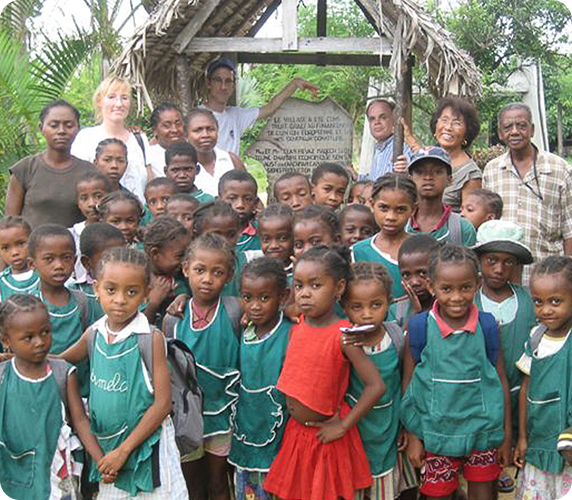
Implementation of the Kit Mad/ERE educational program
Malagasy schoolteachers are trained and provided with teaching materials to empower local communities and raise awareness about the conservation of natural resources. Kit Mad ERE program
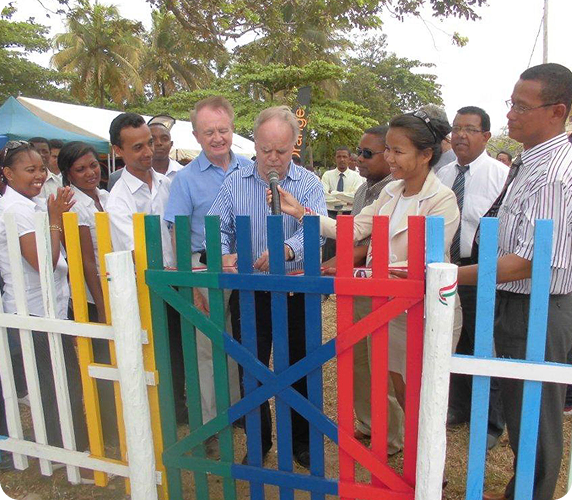
Maintenance of schools
Aust & Hachmann finances the maintenance of the cyclone-proof schools.
Support for the non-governmental organization CALA
The NGO CALA operates two villages in Madagascar’s vanilla region that accommodate leprosy patients and their families, who are often rejected by society. The project provides these people with a home that provides medical care and canteens.
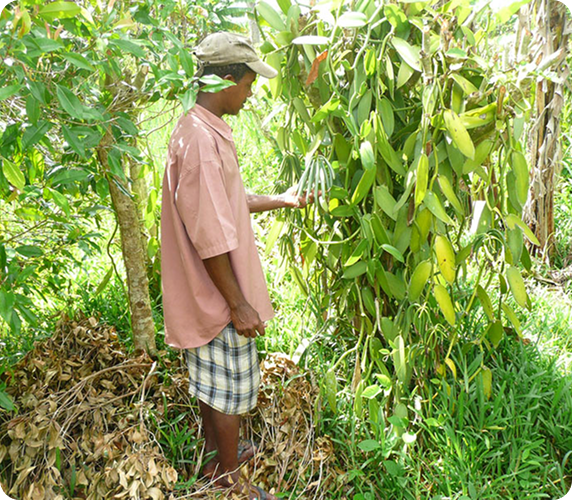
Support for the Macolline Nature Reserve
This plant conservation park was established in conjunction with the CALA villages. Since leprosy sufferers and their families often have no employment opportunities due to social exclusion, Macolline serves not only nature conservation but also social integration and educational purposes.